Hotel Key Card Types: M1, MIFARE, and Temic Explained
Hotel key card types — M1 (UID-only), MIFARE (13.56MHz sector-key), and Temic (125kHz) — decide how a key card power switch binds power to a room. Learn…

Hotel key card types fall into three families that decide how a hotel key card switch can bind power to a room: M1 (UID-only, read by any universal switch), MIFARE (13.56MHz with sector-key auth for room-binding), and Temic (125kHz, the simpler room-bound standard). The card type is the single most important input to switch selection because it determines whether a key card power switch merely enables power or actually enforces per-room energy savings. An M1 card carries only a public serial, so a universal hotel key card switch accepts any M1 card and cannot tell rooms apart; a MIFARE or Temic card carries room identity the switch can validate, so only the room's own card works. Choosing among hotel key card types is therefore choosing between convenience (M1, no re-card) and enforcement (MIFARE/Temic, one card per room).
Hotel Key Card Types: M1 Cards UID-Only and Universal
A hotel key card of the M1 type (the Mifare 1K/S50 class at 13.56MHz, or a 125kHz Temic/EM clone) exposes only its UID during the anti-collision phase, with no secret key checked. A hotel key card switch reading UID-only accepts that card unconditionally, which makes the universal model the easiest retrofit: any guest card, staff card, or even a transit card activates the room. The cost is zero room-binding — a guest holding two room cards can leave one in a switch to keep that room powered, quietly defeating the energy saving. For dorms, budget properties, and mixed-card estates where re-carding is impractical, M1 is the pragmatic choice; for hotels that must enforce savings, it is the starting point to graduate beyond. A key card power switch on M1 is the lowest-friction entry, not the tightest control.
MIFARE and Temic: Room-Bound Cards
MIFARE (13.56MHz) and Temic (125kHz) are the room-bound hotel key card types. A MIFARE card stores a sector key the RFID energy saver validates before closing the relay, so only the room's own card — written with that key — works; a cloned or wrong-room card fails. Temic offers the same room-binding at 125kHz with simpler (often unencrypted) identification, at lower component cost. Both stop cross-room sharing, which is the behavior that erodes the 25–40% savings a hotel key card switch is bought to deliver. A key card power switch reading MIFARE or Temic turns the card into a room-specific token: power follows the correct guest, not whoever holds a card. Match the RFID energy saver to the card your door locks already issue to avoid a re-card project.
Matching Key Card Types to Your Switch
Specify the switch by the hotel key card types your property already runs. M1-only or mixed → universal hotel key card switch (fastest retrofit, weakest binding). MIFARE door system → MIFARE power switch for sector-key room-binding. Temic or legacy 125kHz → Temic energy switch. TTLOCK locks → TTLOCK compatible switch that reads the TTLOCK sector key. The card type you issue is the constraint; a key card power switch should read it, never force a swap. See the hotel energy saving switch buying guide for the full model-by-model table and the MIFARE vs Temic vs 125kHz deep dive.
Not sure which sensor fits your project?
Talk to our mmWave application engineers for a free consultation.
Find the right presence sensor for your hotel project
Compare the 3 protocols, check hotel-specific case studies, and download the installation guide
Related products
3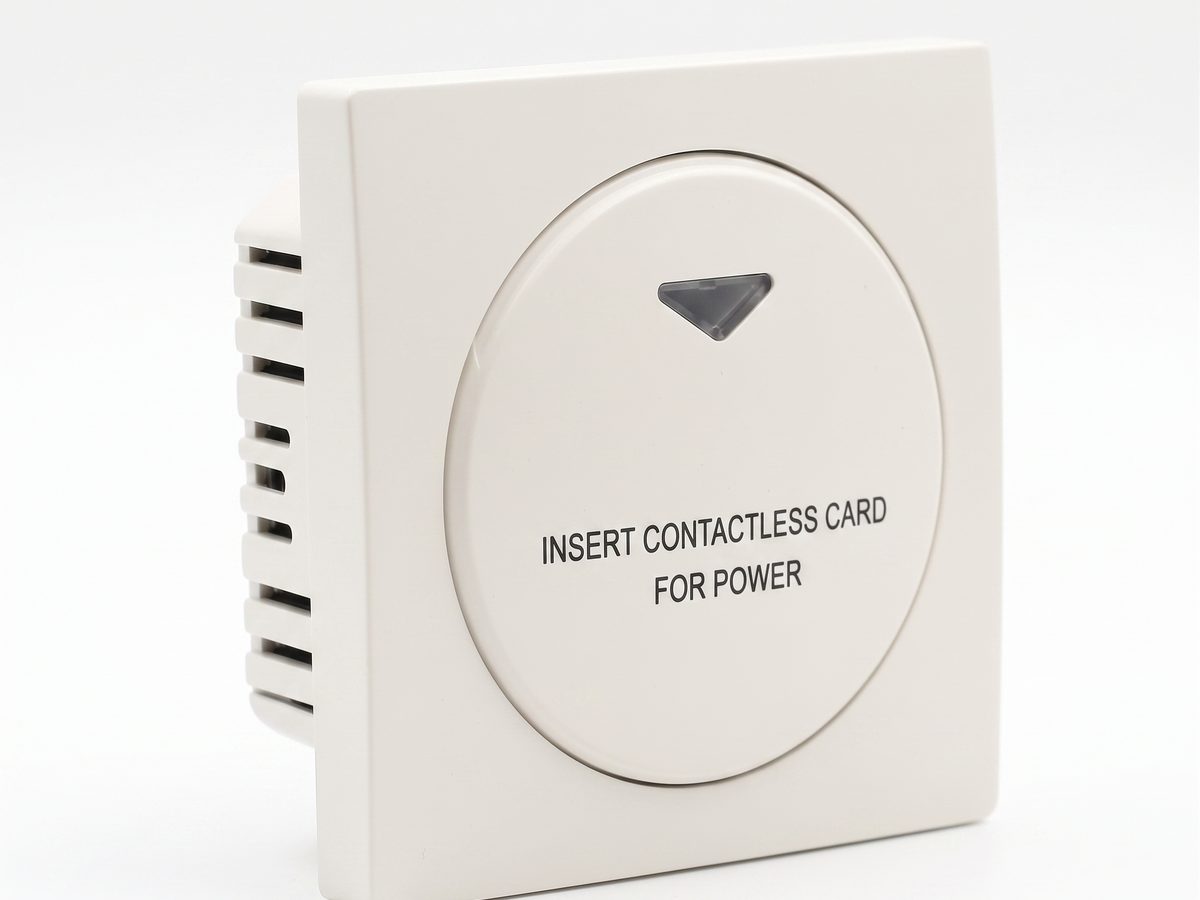
Hotel Key Card Switch — Guest Room Power Control
Hotel key card switch for guest room power control. RFID/IC card detection, insert-and-power, card removal time-delay power-off. 220V AC, 10A-16A, RS485 or dry contact. CE RoHS. OEM/ODM supplier.
This page already points to it as the next recommended reference.
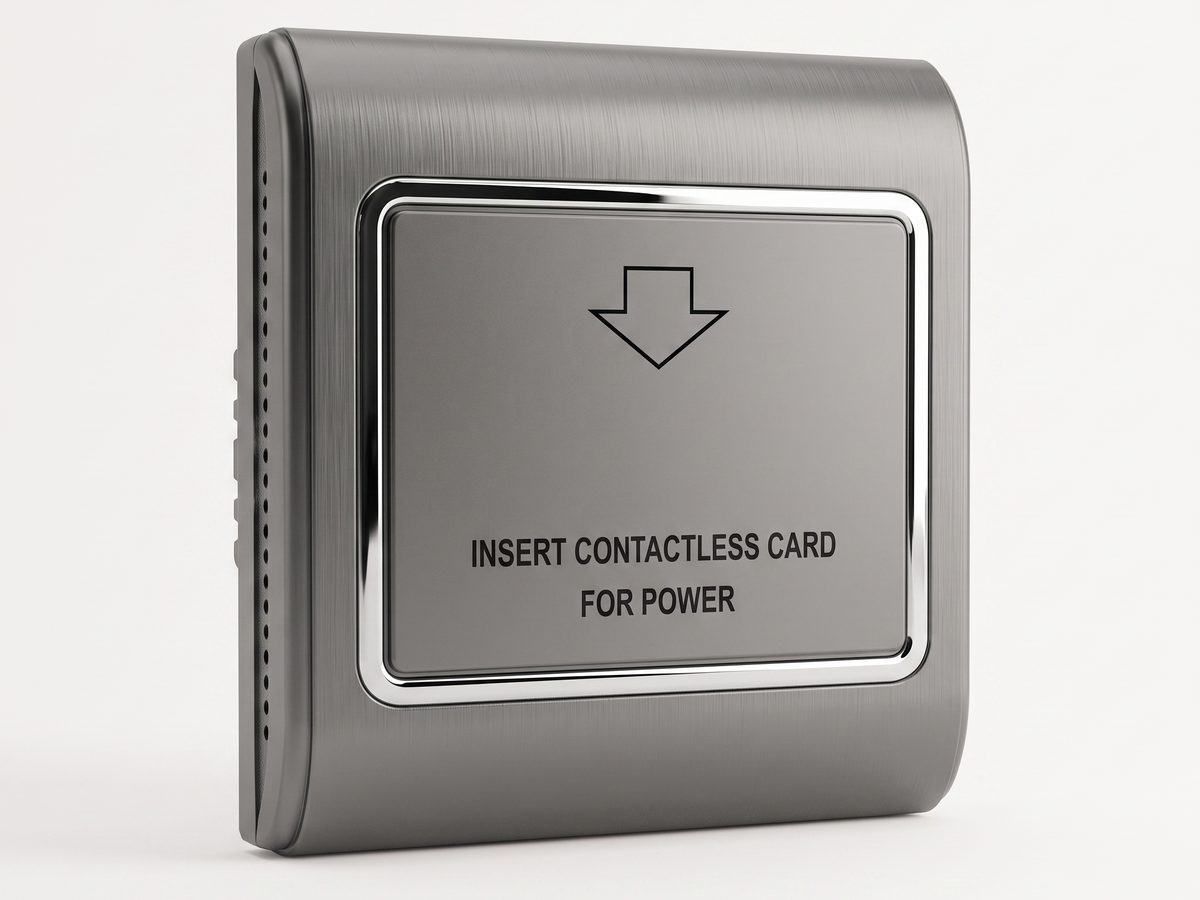
RFID Energy Saving Switch — Room-Bound MIFARE Card Switch (Type B)
RFID energy saving switch that binds power to a specific room MIFARE card. 13.56MHz MIFARE / 125kHz Temic, AC 180–250V, 30A, 15s delay-off. An RFID hotel switch that stops card-sharing between rooms and cuts 25–40% room energy.
This page already points to it as the next recommended reference.
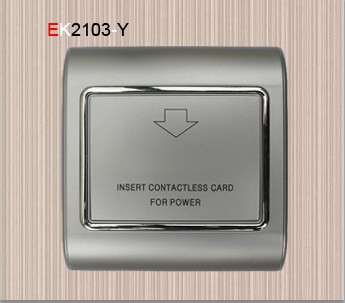
TTLOCK Compatible Energy Switch — Room-Bound + Time-Limited (Type C)
TTLOCK compatible energy switch with room ID and time limit. Works with TTLOCK / TTHotel MIFARE cards via sector-key auth, AC 180–250V, 30A. An encrypted keycard switch and TTLOCK ES2 energy switch for ecosystem-locked hotel retrofits.
This page already points to it as the next recommended reference.
Related solutions
3 Hotel Energy Saving Switch Buying Guide 2026
A hotel energy saving switch buying guide covering universal card, RFID/MIFARE, TTLOCK compatible, BLE smart, and occupancy sensor switches. Pick the right key card power switch, card insert power switch, and energy saving key switch for your rooms.
This page already points to it as the next recommended reference.
Guest Room Management System Based on Card-Controlled Power
A practical guest-room management system for controlling room power through key card switches, contactors, and clearly documented operating rules.
It supports the same product context: Hotel Key Card Switch — Guest Room Power Control, RFID Energy Saving Switch — Room-Bound MIFARE Card Switch (Type B).
Hotel Energy Saving with Guest-Room Power Switching
A hotel energy-saving solution that uses card-controlled room power to prevent lights, air conditioning, and selected outlets from running unnecessarily.
It supports the same product context: Hotel Key Card Switch — Guest Room Power Control, RFID Energy Saving Switch — Room-Bound MIFARE Card Switch (Type B), TTLOCK Compatible Energy Switch — Room-Bound + Time-Limited (Type C).
Related blog posts
3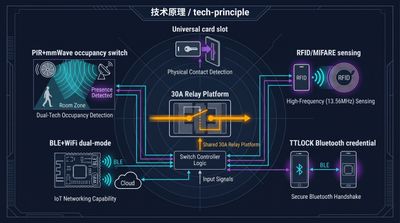
Hotel Key Card Switch: Types, Models, and How to Specify
A hotel key card switch spans universal, RFID, TTLOCK, BLE, and occupancy models. This guide to the key card / keycard switch family covers the head terms —…
It supports the same product context: Hotel Key Card Switch — Guest Room Power Control, RFID Energy Saving Switch — Room-Bound MIFARE Card Switch (Type B), TTLOCK Compatible Energy Switch — Room-Bound + Time-Limited (Type C).

RFID vs NFC for Hotel Key Card Switches: Which Card Tech to Choose
RFID vs NFC for hotel key card switches comes down to range and lock-in: 125kHz / 13.56MHz RFID (MIFARE, Temic) is the hotel standard for room-bound power…
It supports the same product context: RFID Energy Saving Switch — Room-Bound MIFARE Card Switch (Type B), Hotel Key Card Switch — Guest Room Power Control, TTLOCK Compatible Energy Switch — Room-Bound + Time-Limited (Type C).
What Is a Hotel Key Card Switch and How It Saves Room Energy
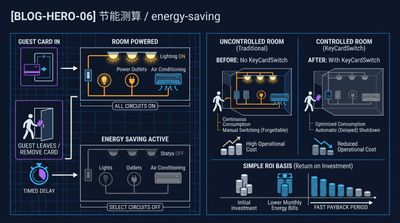
A hotel key card switch is a wall device that powers a guest room when a card is inserted and cuts it when removed, typically saving 25–40% of room…
It supports the same product context: Hotel Key Card Switch — Guest Room Power Control, RFID Energy Saving Switch — Room-Bound MIFARE Card Switch (Type B), TTLOCK Compatible Energy Switch — Room-Bound + Time-Limited (Type C).
Specify your hotel project with our engineers
Send your room count, ceiling type, and protocol preference. We will return a sample plan and quote within 24 business hours.
- Move from general guidance into a product or application discussion.
- Use RFQ when pricing, drawings, MOQ, or launch timing needs structure.
- Keep a direct contact path visible for fast clarifications and handoff.