What a hotel energy management system needs from room power
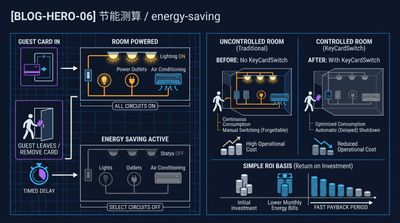
A hotel energy management system lives or dies on one device: the room-power switch. Lights and AC are the largest guest-room load, and they keep running after checkout unless something cuts them automatically. A guest room energy controller built on card and occupancy switches is the cheapest, most reliable way to close that loop — no building BMS required.
Key card switch as the energy management core
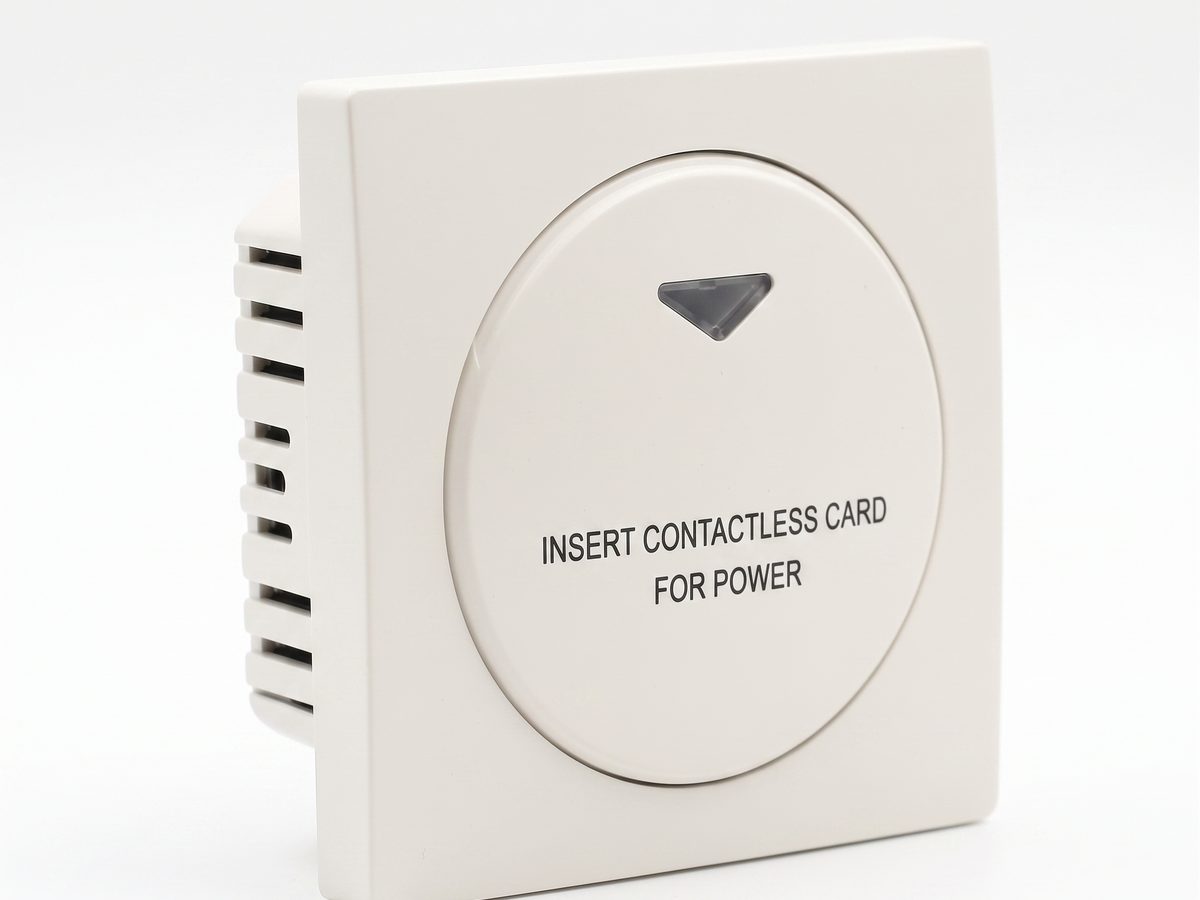
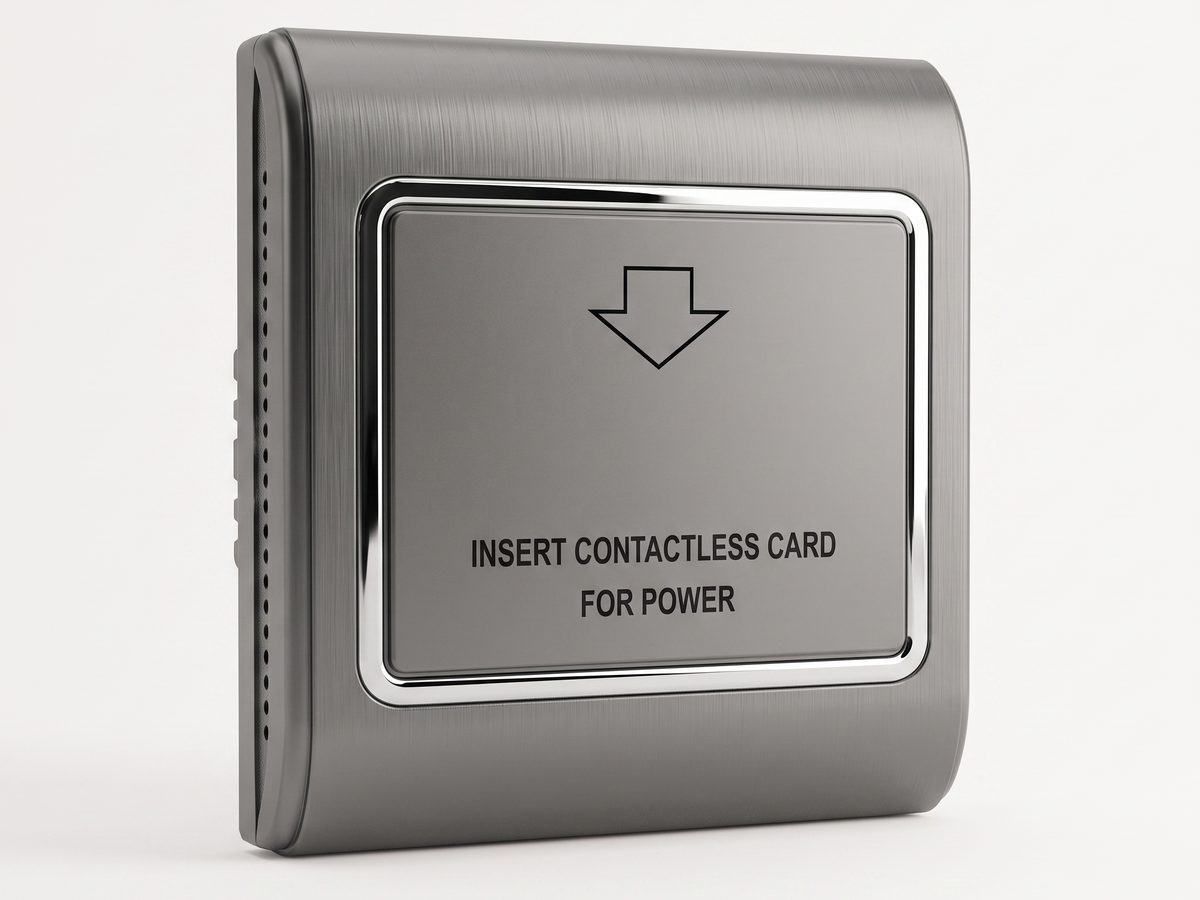
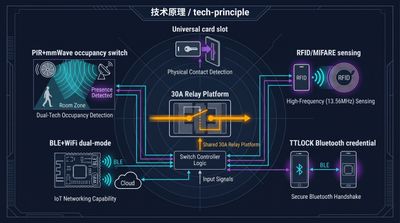
The simplest hotel energy management system starts with a key card power switch in every room. Insert the check-in card → the room powers up; remove it → the 30A relay opens and the AC stops. Properties that deploy this typically cut 25–40% of guest-room electricity because the AC can no longer run on an empty room.
- Universal card switch — any M1 card, fastest retrofit, no card re-issue.
- RFID energy saver — room-bound MIFARE/Temic card, stops cross-room sharing.
- TTLOCK compatible energy switch — drops into an installed TTLOCK estate.
- BLE smart energy switch — adds cloud logging and phone-as-key.
Occupancy sensor switch for card-free rooms
Not every room should depend on a card. A hotel occupancy sensor switch powers the room by presence — PIR for motion, mmWave for still-occupancy — and a door-contact linkage switch mode cuts power the instant an empty room's door closes. The guest room energy controller thus covers both card and card-free rooms from one product family.
Why this hotel energy management system pays back fast
The hardware is a flush 86×86 panel and a 30A relay; install takes minutes with no rewiring. Because the hotel room energy saver needs no network, there is no IT project — just swap the plate. Energy savings show up on the first bill, and the BLE model adds per-room cloud logs for sustainability reporting.
Building your hotel energy management system
Tell us the room count, the card system you use (if any), and whether you want cloud logging. We return a bill of materials that maps each room to the right switch — universal, RFID, TTLOCK, BLE, or occupancy — so the hotel energy management system covers every room type with one supplier and one support channel.
See the hotel energy saving switch buying guide for the model-by-model decision table.